

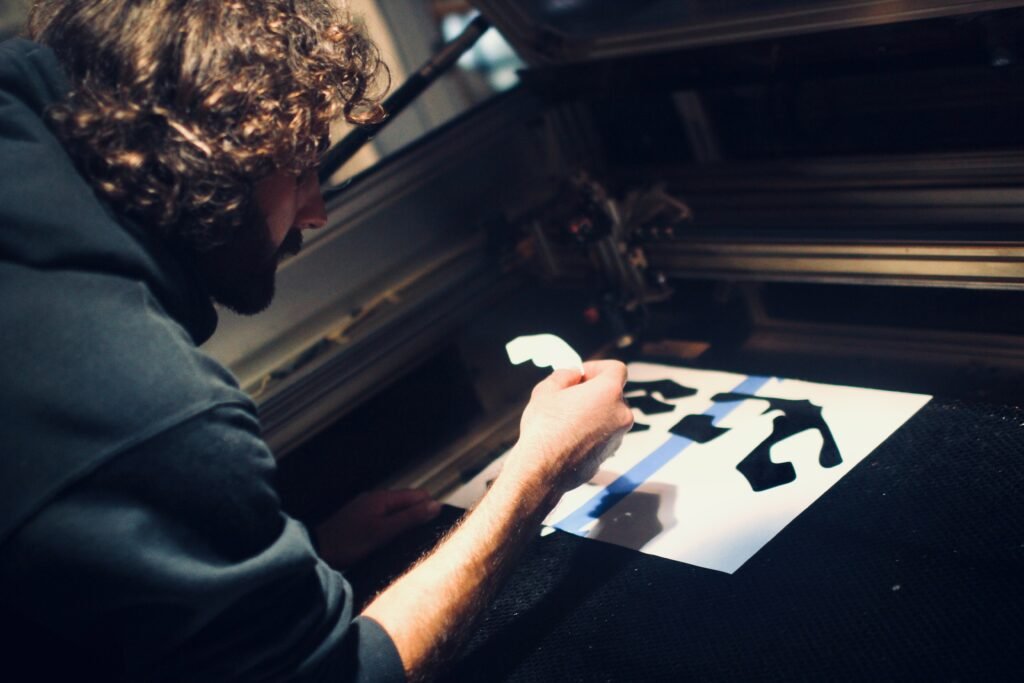
Microfluidic Precision Fabrication
Micron-scale precision laser ablation (channels down to 25 µm), micro-channel milling, and bonded lab-on-a-chip cartridge fabrication in optical polycarbonate, PMMA, and cyclic olefins.
Advanced Laser Micromachining for Microfluidics & Lab-on-a-Chip
Lumicision delivers state-of-the-art laser micromachining for biotech companies, university laboratories, and medical diagnostic device manufacturers across Canada and the United States. Utilizing cold ultraviolet (355nm) and ultrafast pulsed laser heads, we machine fluidic channels down to 25 microns with sub-micron depth repeatability.
Cleanroom-Quality Edge Geometry & Bio-Inert Integrity
Standard thermal cutting creates re-solidified melt ridges that disrupt laminar fluid flow. Lumicision’s cold photoablation process cleanly vaporizes polymers at the molecular level, yielding pristine optical channels with minimal surface roughness (Ra < 0.2 µm). This eliminates the risk of bubble nucleation, protein binding irregularities, and fluorescent background interference.
Compatible Materials & Alloys
Our laser systems are optimized with assist gases (Nitrogen, Oxygen, Shop Air) and beam frequency controls for clean cuts across:
Typical Industrial Applications
- ✓ Point-of-Care (POC) Diagnostic Blood & Saliva Cartridges
- ✓ Micro-Droplet Generators & Single-Cell Encapsulation
- ✓ Capillary Electrophoresis & DNA Analysis Arrays
- ✓ Organ-on-a-Chip & Biomimetic Flow Cells
- ✓ Surface Acoustic Wave (SAW) Sensor Housings
Engineering Tolerances & Capability Guide
| Material & Grade | Thickness / Envelope | Feature / Geometry | Standard Tolerance | Process & Assist Notes |
|---|---|---|---|---|
| Optical Polycarbonate (PC) | 0.1mm - 3.0mm | Micro-channels (25µm - 500µm) | ±0.0004" (±10 µm) | Cold UV ablation with zero thermal melt lip |
| Cast Acrylic (PMMA) | 0.2mm - 6.0mm | Reagent wells & flow ports | ±0.0005" (±12.5 µm) | Optical clarity polished sidewalls |
| Cyclic Olefin Copolymer (COC) | 0.1mm - 2.0mm | Droplet generator nozzles | ±0.0003" (±7.5 µm) | Bio-inert low autofluorescence diagnostic substrate |
| Borosilicate Glass / Fused Silica | 0.15mm - 1.5mm | Capillary channels & vias | ±0.0005" (±12.5 µm) | Crack-free picosecond micro-machining |
* Tighter non-standard tolerances available upon engineering review. Contact our quality department for specific GD&T and CMM inspection requirements.
Frequently Asked Technical Questions
What laser wavelength is utilized for microfluidic channel fabrication?
We utilize cold UV (355nm) and ultrafast picosecond laser architectures. These wavelengths achieve direct photochemical bond breaking (photoablation) rather than thermal melting, guaranteeing crisp vertical channel walls without burrs, melt beads, or thermal distortion in optical plastics.
Can Lumicision produce multi-depth channels and through-hole vias?
Yes. Our CNC laser micromachining systems feature calibrated 3D z-axis profiling, enabling stepped channel depths, multi-tier fluidic networks, capillary stops, and through-hole fluid inlet/outlet vias in a single fixtured setup.
Are parts suitable for medical diagnostics and cell sorting?
Absolutely. All microfluidic components are manufactured under our ISO 9001:2015 quality management system using virgin optical-grade materials compatible with fluorescence imaging, PCR thermal cycling, and biological reagent flow.
What CAD file formats are preferred for microfluidic fabrication?
We accept DXF, DWG, STEP, and vectorized PDF files. For multi-depth micro-channels, color-coded CAD layers indicating target depth in micrometers (µm) or 3D STEP solid models are ideal.
Have CAD Files Ready?
We accept STEP, STP, DXF, DWG, AI, and PDF drawing packages for instant tooling & turnaround evaluation.